


What Is A Potato Press?
A potato press is a kitchen tool used to turn cooked potatoes into a smoother, lighter, and more even texture than ordinary hand mashing. Instead of crushing potatoes roughly with a fork or basic masher, it pushes the cooked pieces through small holes, which helps reduce lumps and gives the final result a finer consistency. That is why this tool is widely used for mashed potatoes, vegetable purées, baby food, and other recipes that need a cleaner texture.
This topic also matters in product sourcing. For importers, kitchenware brands, wholesalers, and food service suppliers, a potato press is not just a simple utensil. It is a tool that affects ease of use, cleaning efficiency, product durability, and the overall impression of quality. Our product connects naturally to this topic because a well-made potato press is expected to do more than mash potatoes. It should feel solid in hand, work smoothly under pressure, and remain easy to clean after repeated use. That is especially important when buyers are comparing options for OEM, ODM, or long-term bulk supply.
What A Potato Press Actually Does
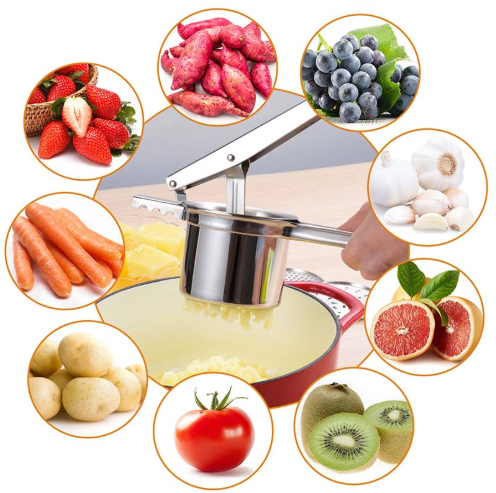
A potato press works by applying pressure to cooked ingredients and forcing them through a perforated plate. This creates a finer output than standard mashing and makes the texture more uniform. In practical use, it is often chosen when the goal is smoother mashed potatoes without overworking the starch too aggressively. It can also be used for cooked carrots, sweet potatoes, pumpkin, and other soft ingredients that benefit from a more refined finish.
The reason many users prefer this tool is simple. Texture matters. A rough mash may still be usable, but a pressed texture usually looks better, feels more consistent, and works more easily in recipes that need a softer finish. In home kitchens this improves the final dish. In restaurants, catering, and food preparation settings, it also helps create a more repeatable result.
Why A Potato Press Is Different From A Basic Masher
A basic masher breaks food down by direct pressure, but it often leaves more variation in texture. A potato press works more precisely because the ingredients pass through small holes, which helps separate the mash into finer pieces. That difference may sound small, but in actual cooking it changes the mouthfeel and the appearance of the dish.
For B-end buyers, this difference affects product positioning. A standard masher can be sold as a basic kitchen tool, but a potato press often sits in a more quality-focused category because the performance result is more specific. Buyers who serve kitchen retail, restaurant supply, or cookware branding programs often want a tool that gives users a more noticeable improvement in use experience. This is one reason the category remains attractive in both household and foodservice channels.
Why Material Quality Matters In A Potato Press
A potato press handles repeated force, direct food contact, and frequent cleaning. Because of that, material quality matters a great deal. If the structure feels weak, bends too easily, or loses surface quality after repeated washing, the product quickly loses value. A stronger stainless steel construction gives the tool better durability and a more stable feel during pressing.
Our product fits well into this requirement because buyers usually want a press that supports regular kitchen use without becoming hard to clean or awkward to handle. In real sourcing, this is not only about appearance. It is about how the product performs after shipment, after repeated use, and after being added to a broader product line. A press that feels reliable helps support both customer satisfaction and repeat purchasing.
Why This Matters For Commercial Buyers
When buyers ask what is a potato press, they are often also asking whether the product is suitable for their market. That question becomes even more important in commercial channels. A restaurant supplier may want a tool that handles repeated use with less effort. A kitchenware importer may want a product that looks refined in packaging and performs well in customer reviews. A private label buyer may want flexible branding, stable quality, and a supplier that can support long-term repeat orders.
This is where product sourcing becomes more practical than descriptive. Buyers are not only comparing shape or price. They are comparing consistency, handle comfort, cleaning convenience, packaging options, and production reliability. In many cases, the real decision is based on whether the supplier can reduce future problems rather than simply offer a lower first quotation.
That is also why the keyword commercial potato press matters in real purchasing discussions. It reflects a more demanding use case, where reliability, output consistency, and daily cleaning efficiency all matter more than a simple entry-level tool.
Why A Potato Press Is Useful Beyond Potatoes
Although the name focuses on potatoes, the tool has wider use in modern kitchens. It can be used for sweet potatoes, carrots, pumpkin, and other cooked ingredients that need a smoother texture. This wider application makes the product easier to position in both household and professional channels. Buyers are not limited to one use story. They can market the product as a more versatile preparation tool.
That versatility is useful for both retail and foodservice programs. A product with more than one common use tends to carry stronger sales potential because it fits more cooking habits. It also gives wholesalers and distributors more room to build product value in catalogs, marketplaces, and kitchenware collections.
What Buyers Usually Worry About Before Ordering
In B-end purchasing, the biggest concern is rarely the concept of the tool itself. Buyers usually worry about execution. They want to know whether the press feels sturdy, whether the handle design is comfortable, whether cleaning is straightforward, and whether quality remains stable from one order to the next. If one batch feels different from another, the product line becomes harder to manage.
Another common concern is packaging and branding flexibility. Many buyers do not want only a standard item in plain supply. They may need custom packaging, logo application, surface finish choices, or specification adjustments to suit a certain market. That is why OEM and ODM support are often part of the real discussion from the start.
Our products are suitable for this kind of cooperation because the value of a kitchen tool is not only in the pressing function. It is also in how easily it fits into the buyer’s own sales model. A supplier should help support branding, order planning, and repeat consistency, not just shipment.
Why OEM And ODM Matter In This Category
A potato press may look like a simple item, but kitchenware buyers often need more than a ready-made stock option. One market may prefer a certain packaging style. Another may care more about logo presentation, finish appearance, or the balance between home-use design and foodservice positioning. This is where OEM and ODM support become important.
For importers, retailers, and private label brands, the right supplier helps connect product function with market demand. A supplier that can support customization gives buyers more flexibility to shape the product for their channel. That can improve product fit, strengthen branding, and reduce the mismatch between what the market expects and what the standard product offers.
This matters even more in categories like commercial potato press, where buyers may be targeting kitchen equipment programs, restaurant supply business, or broader cooking tool ranges. The ability to align the product with a business plan creates much stronger long-term value than simply choosing the cheapest option.
What Makes A Good Supplier In This Product Segment
A good supplier should offer more than manufacturing. Buyers also need communication, consistency, and practical support. In real business, common pain points include unstable quality, unclear lead times, packaging that does not match the channel, and products that look good in samples but perform less well in volume orders. These are the issues that affect margins and customer trust.
That is why experienced buyers often look for a supplier relationship rather than a one-time transaction. Stable production, clear OEM and ODM support, and a product that can hold up in actual kitchen use all matter. A reliable supplier helps buyers reduce after-sales pressure, improve repeat order confidence, and build a more dependable kitchenware line over time.
Conclusion
So, what is a potato press? It is a tool that turns cooked potatoes and other soft ingredients into a finer, smoother, and more uniform texture than ordinary mashing methods can usually achieve. For users, that means better food texture and easier preparation. For buyers, it means a product category that combines practical function with strong retail and foodservice potential.
A well-made commercial potato press should offer durability, ease of cleaning, comfortable handling, and stable performance across repeated use. It should also come from a supplier that understands OEM, ODM, branding needs, and long-term order consistency. If you are looking for a potato press for kitchenware wholesale, private label development, restaurant supply, or custom product programs, feel free to contact us. We can help you review product details, packaging options, and sourcing needs, and we can also provide practical guidance to support your next order with more confidence.
Previous: