


How Long for Ice Cubes To Freeze in Silicone?
Ice cubes in a silicone tray generally take about four to six hours to freeze solid in a household freezer near -18°C or 0°F. Small cavities may be ready sooner, while large cocktail cubes or spheres made in thick silicone molds may need eight to twelve hours or an overnight freeze.
Silicone trays often take slightly longer than thin metal or rigid plastic trays because silicone transfers heat less efficiently. Their flexibility, however, can make large cubes easier to release without excessive twisting.
Why Silicone Freezing Times Vary
Cavity Volume
Cube volume has the strongest influence. Doubling the width of a cube increases its volume substantially, so a two-inch cocktail cube takes much longer to freeze than a small standard cube.
Depth matters as much as width. A shallow decorative shape may freeze quickly even if its surface looks large.
Silicone Thickness
Thick walls provide structure and durability but slow heat transfer. Molds with reinforced frames may also behave differently from thin flexible trays.
Freezer Conditions
The stated temperature on the control dial may not equal the temperature around the tray. Freezer loading, airflow, door seals, frost buildup, room temperature, and door-opening frequency can all affect performance.
Water Temperature
Cold or room-temperature water normally requires less initial cooling than hot water. The difference becomes less important during a long overnight freeze, but it may affect short production cycles.
Tray Position
Place the mold on a flat, rigid shelf. Silicone trays can bend when filled, creating uneven cubes or spills.
A removable support tray can make transport easier. Leave space around the mold so cold air can circulate.
How to Know When Large Silicone Cubes Are Ready
Do not judge only by the frozen top. Gently press the underside of one cavity. A soft or flexible center can indicate that the cube is still partly liquid.
Release one test cube. If it cracks, collapses, or leaks water from the center, return the tray to the freezer.
For a planned event, freezing large silicone cubes overnight is safer than depending on the shortest estimated time.
How to Release Ice Without Damaging the Mold
Remove the tray and allow it to stand briefly at room temperature. Flex the silicone around each cavity and push from the bottom rather than pulling the cube by force.
Avoid sharp knives or metal tools, which may puncture the mold. Do not use boiling water to loosen the cubes, as rapid melting can affect shape and cleanliness.
Transfer the released cubes to a sealed freezer container. Leaving them exposed can allow surface frost and food odors to develop.
Prevent Silicone From Absorbing Odors
Food-quality silicone is durable, but some products may retain odors or oily residue when stored near strongly scented food or cleaned inadequately.
Follow these care practices:
Wash the tray before first use
Use a mild detergent
Clean corners and decorative details
Rinse thoroughly
Dry completely before storage
Keep it away from exposed aromatic food
Follow the manufacturer’s dishwasher instructions
Avoid unapproved abrasive or chemical cleaners
Persistent odor, tackiness, cracks, or surface deterioration may indicate that the tray should be replaced.
Planning Several Batches
Silicone molds for large cubes often contain fewer cavities than standard trays. A six-cavity mold that takes eight hours cannot provide a large event quantity at short notice.
Calculate the number of cubes required and work backward from the serving time. Transfer each finished batch into sealed freezer bags or containers and refill the mold immediately.
Large cubes are often used for cocktails and spirits because they provide an attractive presentation and can dilute a drink more slowly than several small cubes. Actual melting depends on drink temperature, room conditions, cube size, and handling.
From Freezer to Table
Once removed from the freezer, even a large cube begins absorbing heat. Proper serving equipment helps preserve it during preparation and table service.
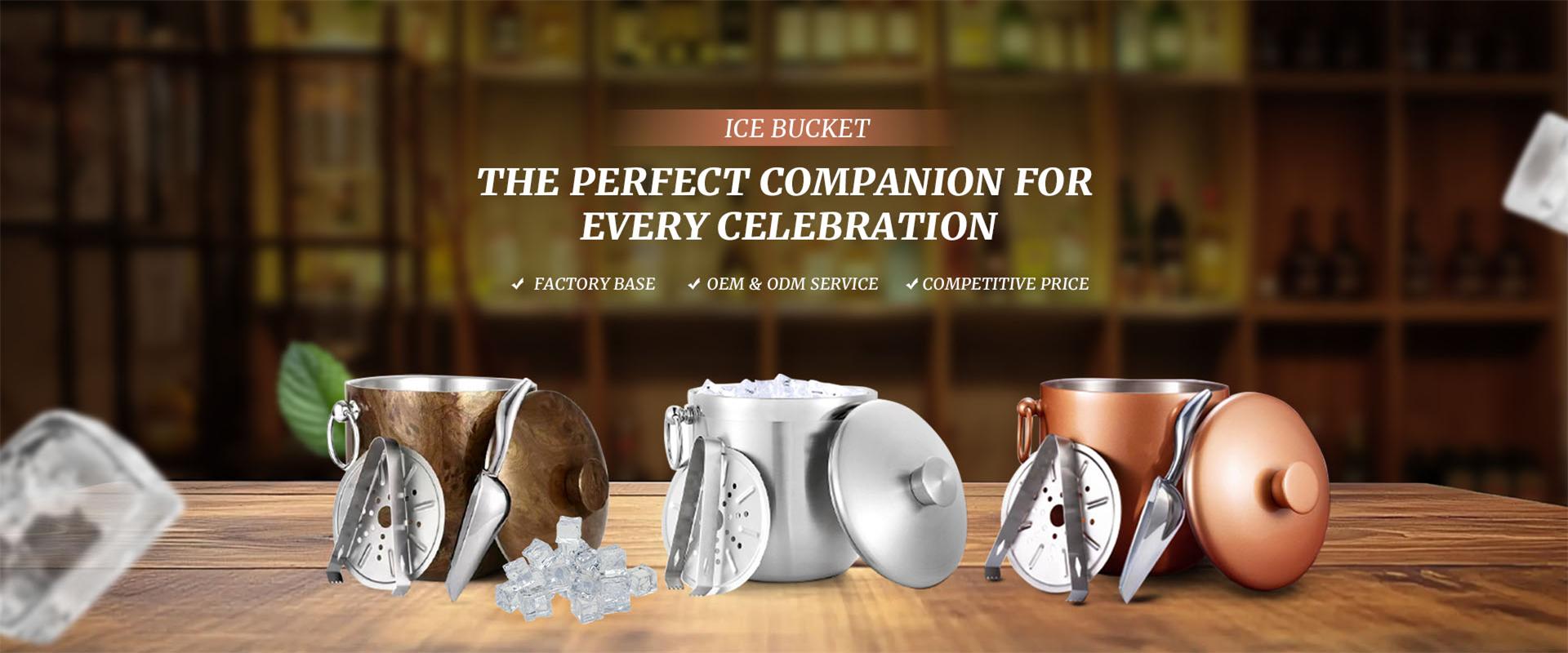
Our factory manufactures stainless steel Ice Buckets for household, hospitality, bar, restaurant, and event applications. We supply insulated and double-wall models with different lids, handles, scoops, capacities, colors, finishes, logos, and packing options.
As a reliable export supplier of insulated stainless steel ice buckets, we support OEM orders and private-label programs after product specifications are confirmed. Buyers can review the target capacity, construction, finish, branding, accessories, packaging, purchase quantity, and service environment with our team.
See our insulated ice bucket options for storing and serving large silicone-molded cubes.
Improve Ice Retention During Service
Pre-chill the bucket, add fully frozen cubes, and close the lid promptly. Use clean tongs or a scoop rather than warm hands.
Do not place the bucket beside direct sunlight, cooking equipment, heating vents, or other warm surfaces. Remove excessive meltwater when appropriate, since floating ice can melt more quickly as surrounding water warms.
Silicone ice cubes usually need four to six hours, but large formats should be given eight to twelve hours or left overnight. Testing the actual mold in the actual freezer is the most reliable way to establish a repeatable production schedule.