


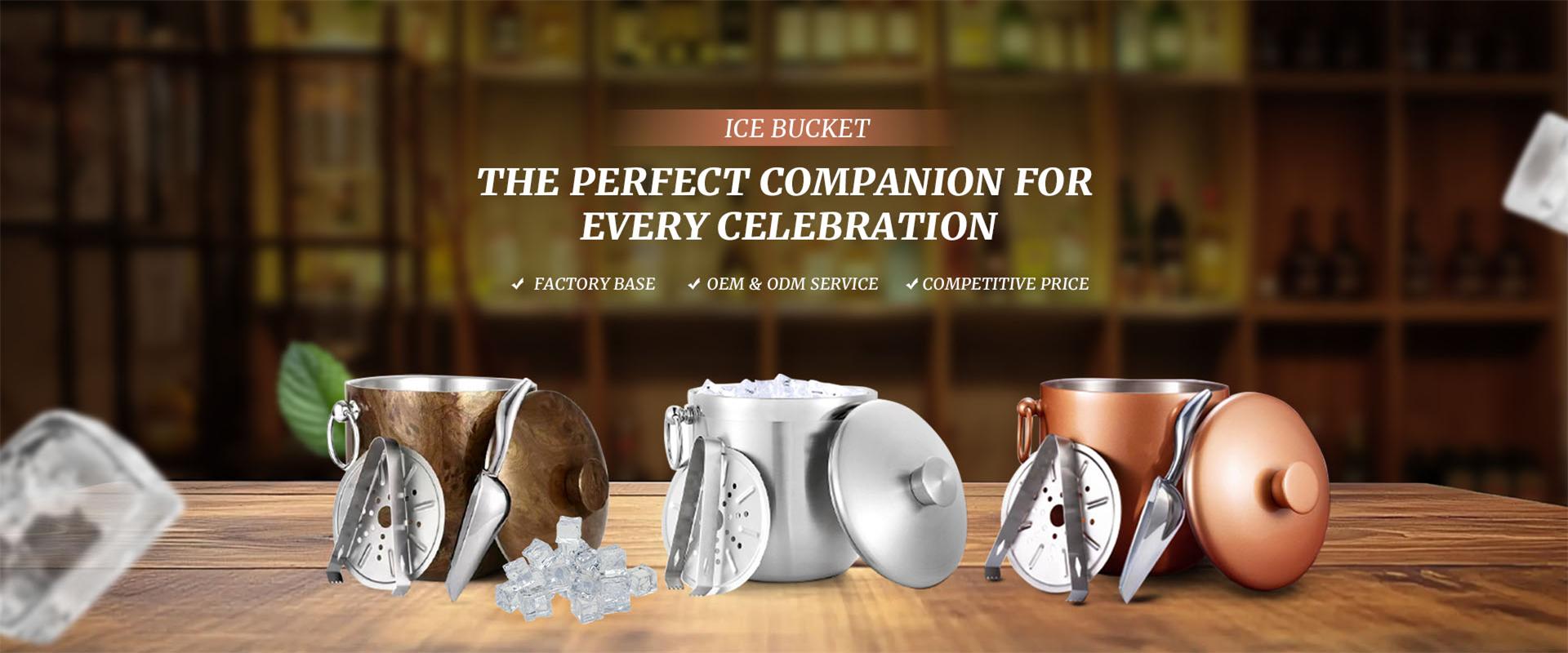
A Complete Guide to Choosing the Best Ice Buckets in 2026
The best Ice Bucket in 2026 is not simply the thickest or most decorative model. It needs to hold the right amount of ice, slow heat transfer, stay stable during service, allow hygienic handling, and match the cleaning routine of the venue. Hotels, bars, restaurants, event suppliers, retailers, and home users therefore need different combinations of capacity, insulation, lids, handles, scoops, and finishes.
Match the Bucket to the Service Setting
A compact mini-bar bucket should be easy for a hotel guest to lift and should not overwhelm a small counter. A bar bucket needs quick access, a stable base, and a practical scoop position. Event service may require larger capacity, secure handles, and a lid that protects the ice while staff move between tables.
Retail buyers should think about how customers will understand the product at first glance. A double-wall body, lid, scoop, and stated capacity are easier to communicate when these details appear clearly on the packaging rather than being hidden in a long description.
Compare the Main Ice Bucket Types
| Ice bucket type | Main advantage | Points to check | Common setting |
|---|---|---|---|
| Single-wall stainless steel | Lightweight and straightforward | Faster heat transfer and exterior condensation | Short home or table service |
| Double-wall insulated | Slows heat entering through the body | Joint quality, wall construction, and interior cleaning | Hotels, bars, restaurants, events |
| Bucket with lid | Reduces exposure to warm air and debris | Lid fit, opening comfort, and storage | Guest rooms and outdoor service |
| Bucket with scoop or tongs | Supports cleaner serving | Tool material, grip, and storage position | Bars, catering, hospitality |
| Large beverage bucket | Holds bottles or cans with ice | Handle strength, filled weight, and drainage | Parties, promotions, outdoor venues |
Material Matters, but Construction Matters Too
Stainless steel is widely used because it is durable, clean-looking, and easy to maintain when properly finished. Food-contact requirements should be confirmed for the selected model, especially when ice will be served directly in drinks.
Do not judge insulation from the phrase “stainless steel” alone. A single-wall bucket and a double-wall bucket can look similar in a photograph but handle heat and condensation differently. Check the complete construction, the rim, base, lid, handle fixing, and any internal strainer rather than focusing only on the outer finish.
Capacity Should Follow the Refill Routine
An oversized bucket becomes heavy and occupies unnecessary table space. An undersized bucket creates constant refilling and more trips to the ice machine. Estimate the number of guests, expected service interval, type of drinks, and whether the bucket will hold loose ice or complete bottles.
Our range includes compact, tabletop, insulated, outdoor, lidded, and approximately 3.0-liter directions. Product capacity should always be confirmed using the chosen item code because dimensions and usable volume differ between models.
Look for Practical Serving Details
A well-designed lid should be easy to lift without scraping the rim. Handles should remain secure when the bucket is full. A scoop or tongs reduces direct hand contact, but it also needs a clean storage position that does not prevent the lid from closing.
The base should sit flat on a table, tray, or bar counter. For colored or matte finishes, buyers should assess fingerprint visibility, scratch appearance, and color consistency on a physical sample. Protective packing is especially important because a good surface can still be damaged before the product reaches the customer.
Cleaning Should Be Considered Before Purchase
The interior needs to be accessible to a soft cloth or sponge. Decorative grooves, poorly finished seams, and narrow spaces around handles can add unnecessary cleaning work. Mild detergent is normally preferable to aggressive chemicals or abrasive tools, but the final care instructions should match the selected finish.
Allow the bucket and accessories to dry completely before storage. In hospitality use, lids and scoops should be accounted for as part of the complete set so that replacement and inventory problems do not interrupt service.
What Wholesale Buyers Should Put in the Specification
Anyone assessing a stainless steel ice bucket wholesale supplier should request a written specification covering material, construction, capacity, dimensions, finish, lid, scoop or tongs, handle structure, logo method, individual packing, master carton, quantity, and inspection requirements.
Our housewares business was established in Jiangmen in 2011 and has more than a decade of experience in international and domestic household-product trade. We support OEM and ODM requirements such as custom logos, colors, finishes, accessories, and packaging. You can learn more about our housewares supply background.
For one published double-wall ice bucket with lid and scoop, the listed starting MOQ is 500 pieces and custom-order production is shown as approximately 45 days, subject to the confirmed requirements. These figures should not be applied automatically to every style; the quotation must follow the selected model and customization plan.
A Final 2026 Buying Checklist
Before approving an ice bucket, answer five questions:
Will it hold loose ice, bottles, cans, or a combination?
How long will one service period last before refilling?
Is a double wall, lid, scoop, handle, or strainer required?
Can staff clean, dry, store, and inventory every component easily?
Are capacity, finish, logo, packaging, and inspection details written into the order?
The best choice is the bucket that fits the real serving routine and remains consistent from the approval sample through repeat deliveries.
Plan Your Ice Bucket Order
Share the intended venue, capacity, accessories, finish, target quantity, logo, and packing format with us. Click here to ask for a wholesale quotation, and our team will identify the product direction that fits the service plan.