


How Do I Keep Ice From Melting Faster?
Ice melts more slowly when heat transfer and warm-air exposure are reduced. Double-wall insulation, a fitted lid, suitable ice size, shade, and limited opening frequency all contribute to longer cooling performance.
What Causes Ice to Melt Quickly?
Ice melts because heat from the surrounding environment moves into the ice.
Several factors accelerate this process:
High room temperature
Direct sunlight
Warm surfaces
Frequent lid opening
Small ice cubes
Thin bucket walls
Poor insulation
Warm beverages placed inside
Excessive empty space around the ice
The bucket cannot completely stop melting.
Its job is to slow the transfer of heat and keep the ice usable for a longer period.
Does Double-Wall Insulation Make a Difference?
Yes, provided the insulation structure is properly designed.
A double-wall bucket creates a separation between the inner and outer walls, reducing direct heat transfer.
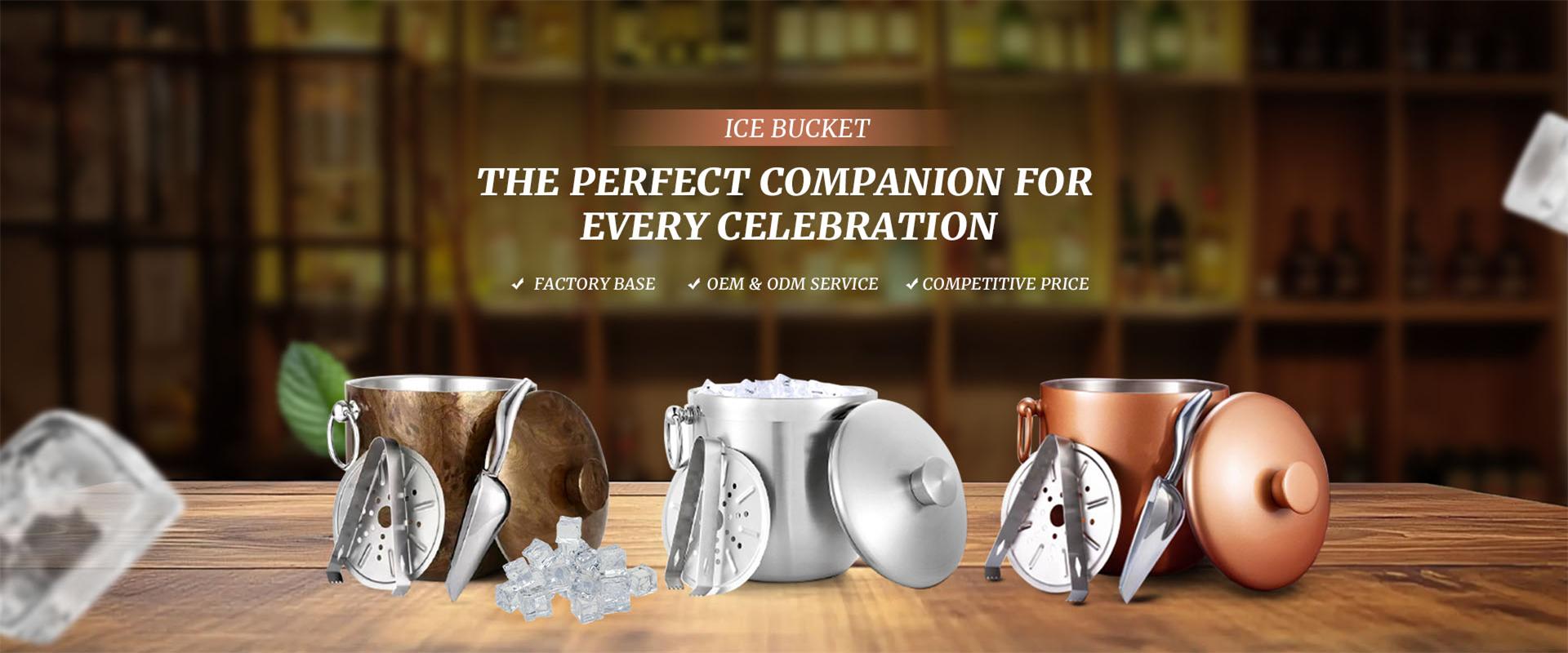
Our Thermal Ice Bucket uses a double-layer structure and is designed for hotel room service, bars, restaurants, catering, and other beverage-service environments.
The current product specification reports approximately 15% ice melt after six hours at 25°C under its stated test conditions.
Actual results will vary with ice size, fill level, room temperature, lid use, and beverage loading.
Why Does the Lid Matter?
Every time the lid is removed, warmer air enters the bucket.
If the lid is fitted properly, it can reduce unnecessary heat exchange when the bucket is not being accessed.
A good lid should:
Fit consistently
Close without excessive force
Maintain contact around the rim
Avoid unnecessary gaps
Remain secure during handling
For commercial use, lid consistency matters because a sample with a good seal is not enough. The same performance needs to be maintained throughout the production batch.
Does Ice Cube Size Affect Melting Speed?
Yes.
Small ice cubes have a greater surface area relative to their volume, so they generally melt faster than larger pieces under similar conditions.
Large cubes are often useful when the goal is longer cooling.
However, smaller cubes can cool beverages quickly because they provide more contact area.
Therefore, the best ice size depends on whether the priority is:
Fast cooling → smaller or moderate ice
Longer retention → larger ice
This is a product-use decision rather than a simple “larger is always better” rule.
Should the Ice Bucket Be Pre-Cooled?
Pre-cooling can help reduce the initial heat load.
If a warm bucket receives cold ice, some of the ice energy is immediately used to cool the container itself.
A practical sequence is:
Cool the bucket → Add ice → Add chilled beverage → Close the lid
The effect is especially useful in warm environments.
For hospitality operations, preparing the bucket in advance can also make beverage service more consistent.
Why Should Direct Sunlight Be Avoided?
Sunlight adds radiant heat to the outer surface.
A bucket placed on a sunny patio can therefore experience significantly more heat exposure than the same bucket placed indoors or under shade.
For outdoor events:
Keep the bucket shaded
Avoid dark hot surfaces
Minimize lid opening
Keep the bucket away from direct heat sources
Use an insulated model where practical
Our ice bucket range includes models designed for outdoor and hospitality applications, allowing buyers to select according to the actual service environment.
Which Factor Has the Biggest Impact?
There is no single answer for every situation, but the main factors can be prioritized.
| Factor | Influence on Melting | Practical Action |
|---|---|---|
| Ambient temperature | High | Keep the bucket cool |
| Insulation | High | Use double-wall construction |
| Lid opening | High | Keep closed when possible |
| Ice size | Medium–High | Use suitable larger cubes for retention |
| Sun exposure | High | Use shade |
| Bucket material | Medium | Choose suitable metal construction |
| Fill level | Medium | Avoid unnecessarily low ice volume |
| Beverage temperature | Medium | Chill drinks beforehand |
The important point is that insulation works as part of a system.
A highly insulated bucket that is repeatedly left open in direct sunlight will still lose ice quickly.
Can You Put Warm Drinks Directly Into an Ice Bucket?
It is better to chill beverages before placing them into an ice bucket.
A warm bottle transfers heat to the ice.
This consumes cooling capacity that could otherwise be used to maintain the remaining ice.
For wine or bottled beverages, pre-chilling provides a more efficient service process.
The bucket should primarily maintain a cold condition rather than being treated as a substitute for a refrigerator.
How Does Condensation Affect the Experience?
Condensation occurs when a cold surface meets humid surrounding air.
A well-insulated bucket can reduce the temperature difference between its internal and external surfaces, which may reduce external condensation.
This is particularly valuable on:
Wooden tables
Hotel furniture
Bar counters
Event tables
Guest-room surfaces
Reducing water accumulation improves not only appearance but also day-to-day service convenience.
What Can Manufacturers Do to Improve Ice Retention?
From the production side, the most important areas include:
Wall Structure
The inner and outer walls should maintain the intended separation.
Insulation Integrity
The insulation layer should remain consistent throughout production.
Lid Fit
The lid and rim need to match accurately.
Welding Quality
Welded areas should remain structurally sound without creating unnecessary leakage or deformation.
Surface Finish
The outer finish should support the intended product positioning while remaining suitable for repeated handling.
Our Stainless Steel Insulated Ice Bucket range provides different structures for buyers comparing insulation, appearance, and service applications.
How Should Buyers Test Ice Retention?
A useful sample test can be standardized.
Record:
Initial room temperature
Initial ice weight
Bucket fill level
Lid condition
Number of lid openings
Elapsed time
Remaining ice
For example, a buyer can compare two samples under the same 25°C room conditions for six hours.
The test should use the same ice type and opening frequency.
This gives a more meaningful comparison than simply stating that one bucket “keeps ice longer.”
Is a Larger Ice Bucket Always Better?
No.
A larger bucket may hold more ice, but it also occupies more space and may require more ice to achieve efficient cooling.
For hotel rooms or small tables, a compact insulated bucket may be more practical.
For busy bars and catering operations, a larger capacity may reduce refill frequency.
The correct size should therefore be based on the service workload.
Need an Insulated Ice Bucket for Your Market?
We provide different ice bucket structures for hotel, restaurant, bar, catering, retail, and outdoor applications.
Explore our Thermal Ice Bucket or Ice Bucket collection to compare suitable designs. For custom capacity, logo, finish, packaging, or bulk supply requirements, send the details through our Request a Quote page.
Previous: