


What Are The Food Safety And Hygiene Rules for Commercial Ice Handling?
Commercial ice handling requires potable ice, clean food-contact equipment, hygienic scooping methods, and protection against contamination. Ice used for cooling packaged beverages must not be reused in drinks. Hotels, bars, and restaurants should follow applicable food safety regulations and established cleaning procedures.
Why Does Commercial Ice Handling Matter to Hospitality Buyers?
Ice used in beverages is considered food because it comes into direct contact with drinks consumed by customers.
Contamination can occur during production, transportation, storage, and serving.
For hotels, restaurants, bars, catering companies, and commercial beverage equipment distributors, hygienic ice handling requires both proper staff practices and suitable equipment.
A poorly designed Ice Bucket may increase cleaning difficulty or create opportunities for contamination.
This means commercial ice bucket procurement should consider more than appearance, insulation, and capacity.
Buyers also need to examine food-contact materials, internal construction, lid design, cleaning accessibility, and compatibility with serving utensils.
What Are the Main Hygiene Requirements for Commercial Ice?
Prevent Direct Hand Contact
Staff should use suitable clean scoops, tongs, or dispensing equipment when handling ice intended for consumption.
Using drinking glasses as scoops is inappropriate because glass breakage can introduce dangerous fragments into the ice.
Keep Beverage Ice Separate
Ice used to cool bottles, cans, or other packaged products must not subsequently be served as an ingredient in drinks.
Packaging surfaces may introduce contaminants.
Protect Ice During Storage
Ice should be stored in clean containers that protect it from dust, splash contamination, and unnecessary handling.
A suitable lid can reduce environmental exposure, although it does not replace proper sanitation.
Maintain Clean Scooping Equipment
Ice scoops should be stored hygienically and protected from contamination.
Their handles should not be allowed to contaminate ice intended for consumption.
Clean and Sanitize Equipment
Ice containers, serving utensils, and food-contact surfaces require cleaning and sanitizing according to their use and the applicable food safety requirements.
For US food-service operations, the FDA Food Code provides a model for local regulatory requirements. Actual enforcement obligations depend on the relevant jurisdiction.
What Commercial Ice Bucket Features Improve Hygiene?
| Design Feature | Practical Benefit | B2B Purchasing Concern |
|---|---|---|
| Smooth Stainless Steel Interior | Easier routine cleaning | Surface finishing consistency |
| Removable Lid | Helps reduce environmental exposure | Lid fit and cleaning accessibility |
| Dedicated Ice Scoop | Supports hygienic handling | Scoop storage and replacement |
| Accessible Interior Corners | Reduces difficult cleaning areas | Product geometry |
| Stable Handle Construction | Supports frequent movement | Joint strength and cleaning |
| Double-Wall Insulation | Helps reduce heat transfer | Structural quality and weight |
For hospitality equipment distributors, these features affect product acceptance in professional service environments.
A visually attractive ice bucket may still be unsuitable for frequent commercial use if the interior contains inaccessible gaps or difficult-to-clean connections.
How Should Commercial Ice Buckets Be Cleaned?
Cleaning procedures should follow the product manufacturer's instructions and the establishment's food safety program.
A typical cleaning sequence involves removing remaining ice, washing surfaces with a suitable detergent, rinsing, sanitizing when required, and allowing hygienic drying.
Particular attention should be given to areas where moisture or residue may accumulate.
These include lid contact surfaces, bottom corners, handles, and scoop holders.
For insulated stainless steel buckets, buyers should also consider whether the construction allows thorough cleaning without damaging the insulating structure.
Commercial buyers should avoid assuming that a product is suitable for machine washing unless the manufacturer confirms the relevant cleaning conditions.
Why Is Stainless Steel Commonly Used for Commercial Ice Buckets?
Stainless steel offers a useful combination of durability, corrosion resistance, and cleaning convenience.
However, stainless steel grade and finishing quality influence its actual performance.
A smooth surface is generally easier to clean than a rough surface containing scratches, poorly finished joints, or residue-trapping areas.
For commercial bar equipment suppliers, surface quality also influences appearance after repeated cleaning.
Visible scratches, water marks, or damaged finishes may create complaints even when the bucket remains functional.
Material specifications should therefore be confirmed before production.
How Does Ice Bucket Manufacturing Affect Long-Term Hygiene?
SENGHO offers stainless steel ice buckets for commercial beverage service, including insulated products with lids and serving accessories.
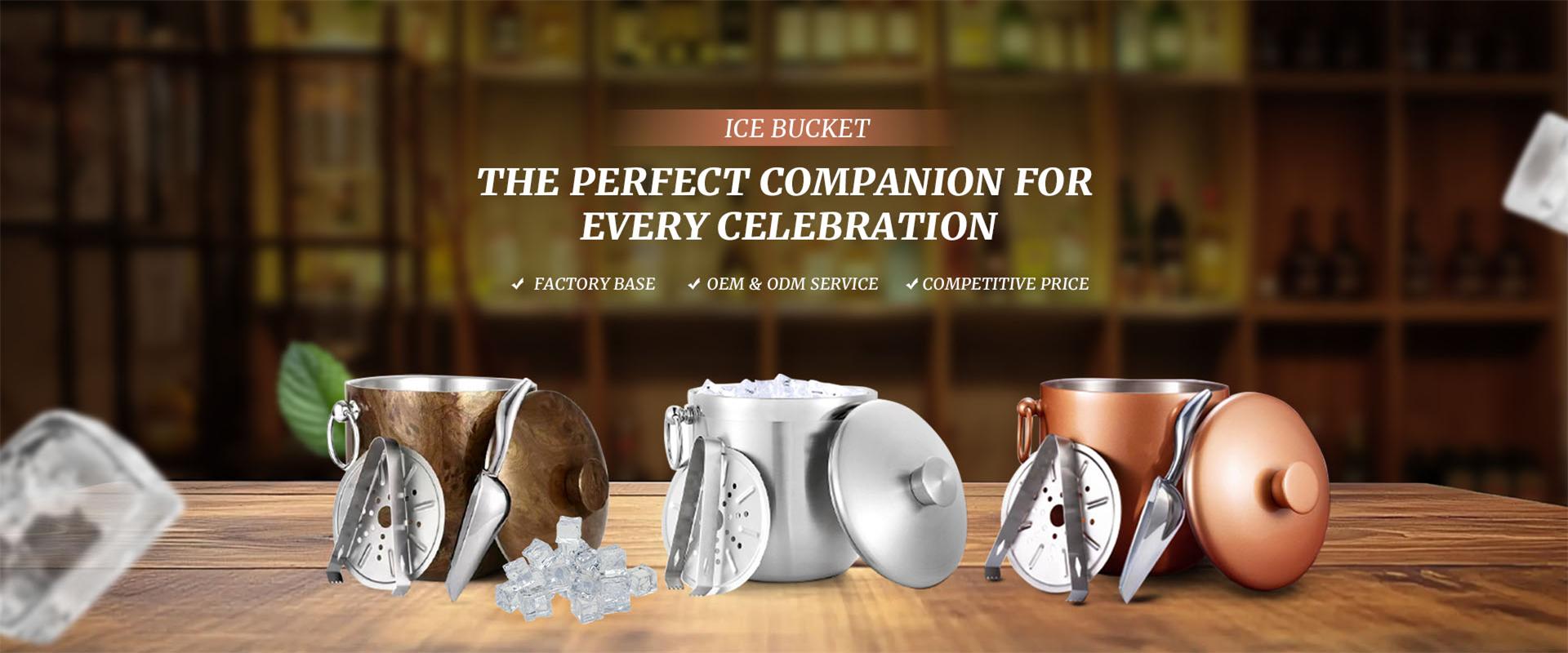
Our commercial ice bucket with lid and scoop uses a double-layer construction designed for bars, hotels, and event applications.
From a manufacturing perspective, several details influence commercial suitability.
Interior Surface Quality: Smooth, accessible surfaces support routine cleaning.
Lid Fit: Consistent lid dimensions help maintain the intended protective and insulation functions.
Handle Attachment: Stable connections are important during repeated carrying and refilling.
Component Compatibility: Scoops, lids, and related accessories should match the approved product configuration.
Batch Consistency: Large hospitality orders require products that maintain consistent capacity, appearance, and functional details.
For OEM hospitality equipment projects, these specifications should be confirmed during sample evaluation.
What Should Hotel and Restaurant Equipment Importers Verify?
Commercial ice bucket importers should request product specifications relevant to the destination market.
Important information includes:
Material composition and food-contact suitability
Interior capacity and dimensions
Insulation structure
Lid and scoop configuration
Cleaning instructions
Available test documentation
Custom logo and finishing options
Packaging and shipment protection
For hotel chains, repeatable product specifications are particularly important.
A replacement bucket supplied months later should match the existing service equipment in size, appearance, and accessory compatibility.
Can OEM Ice Buckets Be Customized Without Affecting Hygiene?
OEM/ODM ice bucket customization can involve colors, decorative finishes, logos, packaging, and selected structural features.
However, customization should not reduce cleaning accessibility or create unsuitable food-contact surfaces.
For example, decorative joints or complex lid structures should be reviewed for residue accumulation and maintenance requirements.
A reliable commercial ice bucket supplier should consider hygiene and product presentation together.
Discuss Your Commercial Ice Bucket Purchasing Requirements
Our team supports commercial ice bucket sourcing for hospitality distributors, hotel purchasing departments, bar equipment suppliers, and international wholesalers. Available product options include stainless steel structures, insulated bodies, lids, serving accessories, and selected customization features.
SENGHO helps buyers review product suitability, cleaning considerations, packaging requirements, and bulk supply specifications. Share your required capacity, intended service environment, customization needs, and purchasing volume so we can recommend suitable options and prepare a quotation.
Request Commercial Ice Bucket Pricing
Previous: