


How Do Producers Ensure Consistency and Quality in High-Volume Ice Bucket Production?
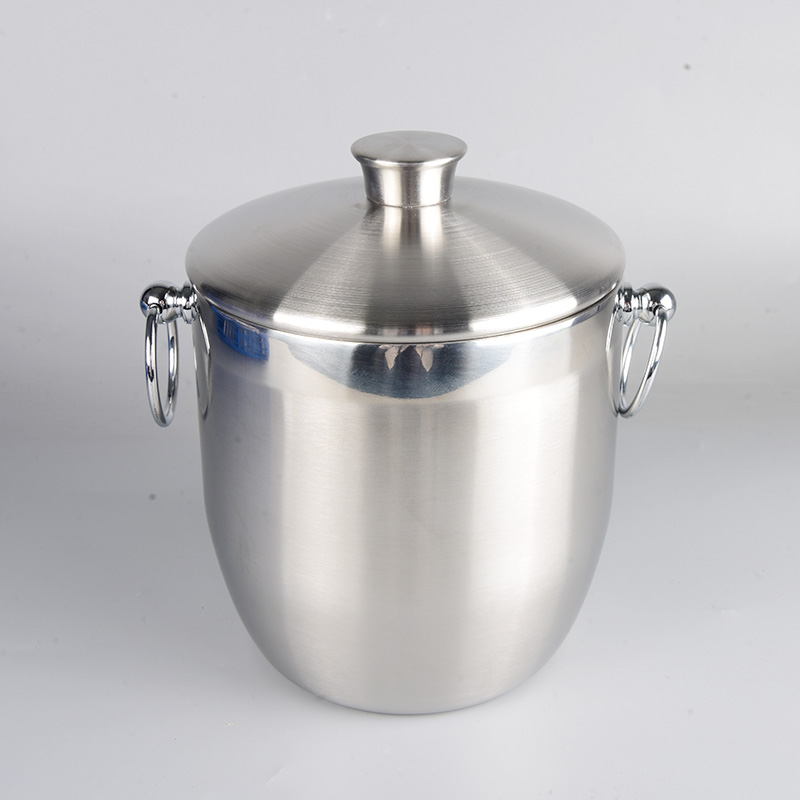
High-volume manufacturing of stainless steel Ice Buckets requires a combination of engineering discipline, advanced machinery, and stringent inspection systems. Ice buckets may look simple, but producing them at scale with uniform performance, durability, and appearance demands a structured approach. This article explores the core methods used by professional manufacturers to guarantee consistency and quality—highlighting practices also applied by SENGHO, maker of premium stainless steel ice buckets such as our insulated double-wall ice bucket series.
Section 1: Standardized Material Selection
Uniform product quality begins with consistent raw materials. Producers rely on a refined procurement system that ensures every batch of stainless steel meets predefined chemical and mechanical standards.
Key criteria for stainless steel selection
Chemical stability: Certified 304 or 201 stainless steel is selected for corrosion resistance.
Sheet uniformity: Thickness deviations can affect durability and thermal performance.
Surface finish quality: Smooth sheets reduce polishing workloads and avoid visible inconsistencies.
SENGHO maintains long-term material partnerships to ensure that every ice bucket is built from stainless steel that meets international food-contact and corrosion-resistance standards.
Section 2: Precision Forming Through Automated Machinery
High-volume ice bucket production requires forming processes that repeat the exact same outcome thousands of times per day. Automation is essential for this level of precision.
How forming remains consistent
| Manufacturing Step | Automated Control Method | Impact on Consistency |
|---|---|---|
| Deep Drawing | Hydraulic presses with digital pressure regulation | Same bucket shape and wall thickness |
| Trimming | CNC circular trimming units | Perfect symmetry and smooth edges |
| Welding (for double-wall buckets) | Automated TIG welding systems | Uniform seam strength and appearance |
| Surface Polishing | Robotic polishing lines | Identical finish across large batches |
These technologies minimize human variability and allow a producer to maintain strict dimensional accuracy across high output volumes.
Section 3: Managing Temperature and Pressure Profiles in Production
Metal forming and welding require precise temperature and pressure settings. Even minor deviations can weaken structural integrity or alter thermal performance.
To control these conditions:
Temperature sensors adjust heating output during welding.
Pressure feedback systems stabilize deep-drawing forces.
Cooling cycles are timed according to metal grade thickness.
This ensures each ice bucket maintains its intended structural strength and shape, especially important for double-walled stainless steel buckets, such as those in the SENGHO collection.
Section 4: Assembly Methods That Support Batch Uniformity
Once parts are formed, producers assemble them using controlled processes to eliminate fit issues and maintain consistency in thermal insulation across all buckets.
Assembly techniques applied in high-volume plants
Precision wall spacing
Ensures proper insulation performance without deformation.Consistent seam finishing
Prevents sharp areas and ensures leak-free inner chambers.Standardized handle and lid mounting
Torque-controlled fastening tools achieve identical grip strength.Interior and exterior alignment checks
Prevents offset positioning that impacts appearance.
Because SENGHO ice buckets are designed for professional use, maintaining accurate assembly alignment is essential for performance and aesthetics.
Section 5: Quality Inspection Systems for Every Production Phase
To ensure consistent results, manufacturers employ multi-stage inspection systems. Each stage examines different elements of the product to identify and correct defects early.
Typical inspection stages include:
Raw material screening
Thickness, hardness, and surface integrity are verified.In-process dimension checks
Laser gauges measure bucket diameter, height, and edge angles.Leak tests (for double-wall buckets)
Pressure air-tightness testing detects micro gaps.Surface finish inspection
Visual and mechanical tests confirm uniform polishing.Final QC review
Packaging, accessories, labels, and appearance are checked.
Only products that pass every checkpoint are approved for shipment.
Section 6: Batch Testing for Long-Term Performance
Producers perform routine batch testing to confirm thermal and structural reliability over time. These tests evaluate whether products remain durable and efficient after extended use.
Common performance tests
Ice retention test
Measures the time taken for ice to melt under controlled conditions.Corrosion resistance test
Stainless steel is exposed to salt spray to simulate long-term use.Drop test
Ensures handle joints and welded seams withstand accidental falls.Temperature shock test
Evaluates structural stability between hot and cold environments.
SENGHO’s manufacturing team uses these tests to validate the performance of each new production batch.
Section 7: Production Speed Does Not Reduce Quality
Scaling production to tens of thousands of ice buckets per month requires a balance between speed and consistency. Established manufacturers use the following principles:
Parallel production lines prevent overload on individual machines.
Predictive maintenance systems monitor machine health.
Digital workflow traceability records material and process data.
Experienced engineering supervisors adjust settings for metal variance.
These systems ensure the plant produces large quantities efficiently while protecting product stability.
Section 8: Customized Production Without Sacrificing Consistency
Many brands and wholesalers require custom engraving, finishes, shapes, or packaging. Reliable producers integrate custom options through modular production systems.
How consistency remains unaffected:
Custom features are stored digitally as templates.
Dedicated machines apply finishes (matte, mirror, brushed, powder-coat).
Engraving depth and position are programmed numerically.
Packaging automation ensures identical protection and presentation.
SENGHO offers OEM/ODM solutions for stainless steel ice buckets, enabling unique branding while keeping performance identical across batches.
Section 9: Why SENGHO Ice Buckets Maintain High Manufacturing Standards
The ability to produce thousands of stainless steel ice buckets with the same quality requires integrated expertise. SENGHO’s production advantages include:
| Capability | Benefit to Clients |
|---|---|
| Experience with large-scale stainless steel forming | Stable and predictable manufacturing cycles |
| Advanced automated polishing and welding lines | Smooth exterior finishing and strong structural seams |
| Strict QC systems | High consistency even under volume pressure |
| Customization support | Branding without altering product performance |
| International quality compliance | Suitable for hospitality, retail, and promotional markets |
Explore our production-ready stainless steel ice buckets: SENGHO Ice Bucket Collection
Conclusion
Consistency and quality in high-volume ice bucket production come from a combination of material precision, automated forming, controlled assembly, and rigorous inspection. Producers must carefully manage temperature, pressure, spacing, finishing, and long-term performance testing to deliver reliable stainless steel ice buckets at scale.
With advanced manufacturing technologies and strict QC programs, SENGHO ensures that every stainless steel ice bucket—whether single-wall or double-wall—meets high performance standards and maintains uniform quality across all batches.