


What Should You Know Before Ordering Custom Pour Over Kettles?
Custom pour over kettles are one of those products that look simple but can easily go wrong in bulk orders. Many buyers focus on the shape or price at the beginning, but after samples and production start, problems usually come from details like pouring control, finish consistency, packaging mismatch, or lead time delays.
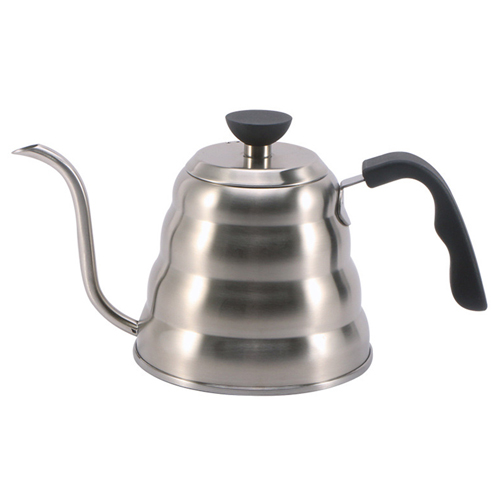
If you are planning to develop your own version of a pour over kettle, especially for retail, café supply, or private label programs, it helps to look at the product from real usage and supply perspectives first. Our long spout Coffee Kettle is a good reference here because it is built around practical brewing use and supports customization for wholesale buyers.
Start From How The Kettle Is Actually Used
Before talking about customization, it is better to think about how your customer will use the kettle. In pour over coffee, the most important part is not the body, but the spout. The water flow needs to be steady and easy to control. If the flow is too fast or unstable, even a good-looking kettle will not perform well.
This is why long spout designs are widely used. Our kettle follows this structure because it helps control pouring speed and direction, which is important for both home brewing and café use. For buyers supplying baristas or specialty coffee brands, this detail often matters more than appearance.
Material Is Not Just About Cost
In bulk orders, material choice is often linked to price first. But for coffee kettles, material also affects how the product feels in hand and how it performs over time.
Our kettle uses 304 stainless steel, which is commonly used for food-related products. Buyers usually prefer this because it feels more reliable and holds up better with daily use. For B2B customers, this helps reduce after-sales issues and keeps product feedback more stable.
If you are building a brand or selling to higher-end markets, choosing the right material at the beginning saves a lot of trouble later.
Get The Size Right Early
Capacity is something many buyers adjust too late. A kettle that looks good in photos may not fit real usage. Some customers want a compact size for personal brewing, while others need a larger one for café or multi-cup use.
Our product offers 1000 ml and 1200 ml options, which already cover most common needs. When you plan customization, it is better to decide this early, because changing size later will affect packaging, shipping, and even pricing.
For wholesale buyers, this also helps avoid delays caused by repeated sample changes.
Finish And Appearance Affect Sales More Than Expected
Surface finish is often underestimated. In reality, it plays a big role in how the product sells. A polished finish feels more premium, while a brushed finish often works better for modern or minimalist brands.
Our kettle supports different finish options, so buyers can match the product with their brand style. This is especially important for private label customers, because consistency across product lines matters.
A mismatch between product design and brand positioning can make even a good product harder to sell.
Customization Is More Than Just A Logo
Some buyers think customization only means adding a logo. In practice, it usually includes more: packaging style, color, surface treatment, and sometimes small structural adjustments.
Our kettle supports OEM and ODM options like logo engraving and different packaging choices. For B2B buyers, this flexibility makes it easier to fit the product into different markets, whether it is retail, online sales, or café supply.
Clear communication at this stage helps avoid unnecessary back-and-forth later.
Understand Market Expectations, Including Electric Versions
Even if you are sourcing a manual kettle, it is useful to understand how the market is evolving. Many end customers are also searching for gooseneck electric kettle, especially in home-use segments.
Our product is a manual kettle, but it serves the same core need: controlled pouring. For some markets, manual models are still preferred because they are simpler, more durable, and easier to position as barista tools.
Knowing this difference helps buyers decide how to position the product and whether to expand into other related items later.
Pay Attention To MOQ And Lead Time
This is one of the most practical parts of the whole process. MOQ and production time directly affect your sales plan.
Our kettle typically works with a bulk MOQ and a production timeline around a few weeks, depending on customization. For distributors and importers, this means planning ahead is important, especially if you are preparing for seasonal sales or new product launches.
Delays at this stage are more common than product issues, so it is better to confirm details early.
Think About Where You Will Sell It
A pour over kettle is not limited to one channel. It can be sold to coffee shops, online stores, retail brands, or even used in gift sets.
Our kettle is suitable for cafés, home brewing, offices, and training use. This kind of flexibility is helpful for B2B buyers because it allows the same product to be sold in different ways.
If your product can fit multiple use scenarios, it is easier to manage inventory and reduce risk.
Conclusion
Custom pour over kettles are not complicated products, but they require clear thinking at the beginning. Pouring performance, material, size, finish, and supply details all matter more than they seem.
Our Long Spout Coffee Kettle is designed around real brewing needs and can be adapted for different markets and sales channels. If you are planning a bulk order or developing your own product line, feel free to reach out. We can go through your requirements together and help you move forward with a clearer and more practical solution.