


How Long Does It Take To Make An Ice Cube?
A standard household ice cube commonly needs several hours to freeze, but there is no single time that applies to every freezer and mold.
Small cubes in a cold freezer may become solid in approximately three to four hours. Large cocktail cubes, ice spheres, and directional-freezing molds may require eight to twenty-four hours.
What Affects Ice-Freezing Time?
Freezing time changes when the cube size, water temperature, freezer setting, or mold material changes.
| Factor | Possible Effect on Freezing |
|---|---|
| Small cube size | Freezes more quickly |
| Large cube size | Requires more time |
| Colder freezer | Increases freezing speed |
| Warm water | Adds cooling time before freezing |
| Metal tray | Transfers heat quickly |
| Thick silicone mold | May freeze more slowly |
| Crowded freezer | Can reduce cold-air circulation |
| Frequent door opening | Raises the internal temperature |
These estimates should be used as a guide rather than a precise timer.
Typical Freezing Times
Standard Ice Tray
A standard plastic tray in a freezer operating near -18°C may produce solid cubes in about three to four hours.
The center may remain soft when the tray is removed too early, even if the surface looks frozen.
Large Cocktail Cubes
A large two-inch cube often requires eight to twelve hours or an overnight freeze.
The greater volume provides slower dilution in drinks, but it also takes longer to freeze completely.
Directional Clear Ice
An insulated clear-ice mold may need twelve to twenty-four hours because the water freezes gradually from one direction.
Removing it before every section becomes solid helps separate the clear ice from the cloudy lower section.
How to Check Whether Ice Is Ready
Do not rely only on the appearance of the top surface.
Press the tray gently or lift one cube from the mold. A fully frozen cube should feel firm through the center and release without collapsing.
Avoid twisting rigid trays excessively, as this may crack the tray or send ice onto the floor.
Can You Speed Up Ice Production?
Lowering the freezer setting slightly may reduce freezing time, but the temperature should remain within the appliance manufacturer’s recommended range.
Use Smaller Cubes
Smaller compartments expose more surface area to cold air and normally freeze faster than large molds.
Leave Space Around the Tray
Place the tray on a flat shelf with enough room for cold air to circulate. Avoid placing warm food directly beside it.
Prepare More Than One Batch
For parties and commercial service, preparing several trays in advance is more reliable than attempting to freeze one large batch shortly before guests arrive.
Why Ice Starts Melting After Removal
Ice immediately absorbs heat from the air, serving tools, drinks, and surrounding container.
An open single-wall container allows room heat to reach the ice more quickly, particularly in warm bars or outdoor event areas.
Using a Double Wall Insulated Ice Bucket
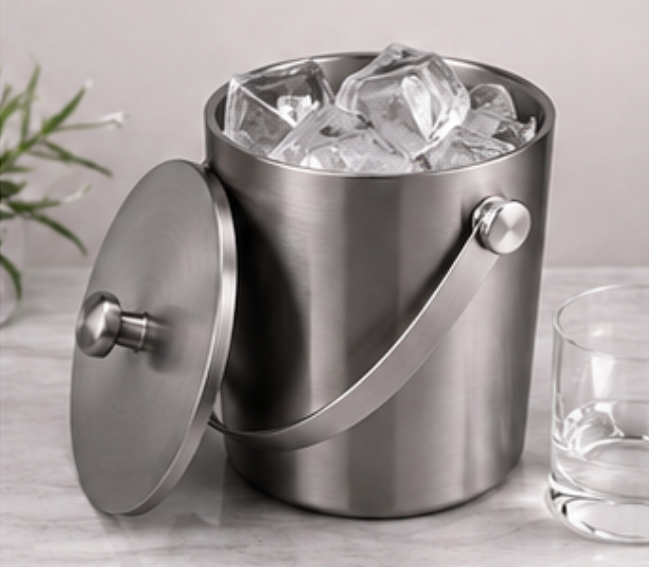
A Double Wall Insulated Ice Bucket creates an air space between the inner and outer walls, reducing direct heat transfer from the surrounding environment.
The bucket does not stop melting completely, but it can slow temperature gain compared with an uninsulated open container.
For better performance:
Pre-chill the bucket before service.
Keep the lid closed between uses.
Use a scoop instead of warm hands.
Drain excess meltwater when necessary.
Avoid placing the bucket near sunlight or heating equipment.
Our Manufacturing and Supply Support
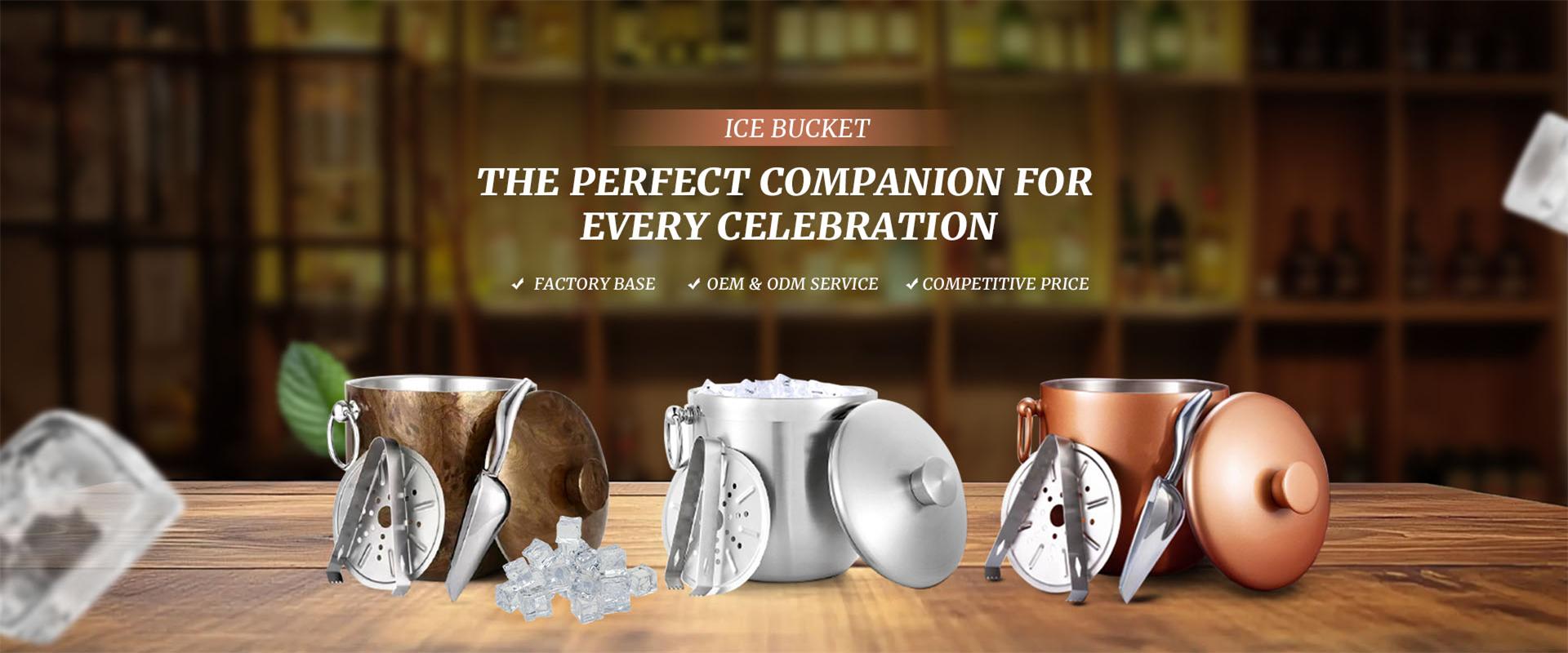
Our ice bucket category includes mini-bar, tabletop, outdoor, hotel, party, and commercial models in different colors and capacities.
We support OEM and ODM requirements involving stainless steel construction, double-wall structures, lids, handles, scoops, logos, surface finishes, and packaging.
Get an Insulated Ice Bucket Quote
Share your target capacity, product dimensions, insulation structure, finish, color, lid design, accessories, packaging, and purchasing volume. We will prepare a Double Wall Insulated Ice Bucket solution for your distribution channel.
Previous: How Much Coffee Grounds for 4 Cups?