


Wine Chillers vs Ice Buckets: Which Should You Use?
Wine chillers and Ice Buckets both use ice or cold surfaces to manage temperature, but they serve different purposes. A wine chiller holds a bottle at an appropriate serving temperature, while an ice bucket stores clean cubes for adding to drinks. Some larger buckets can perform both tasks, but the best choice depends on bottle fit, insulation, serving style and sanitation. Buyers planning an OEM stainless steel wine chiller and ice bucket range should define these functions separately.
Functional Comparison
| Factor | Wine chiller | Ice bucket |
|---|---|---|
| Primary purpose | Cool or hold a beverage bottle | Store serving ice |
| Typical shape | Tall and open for bottle access | Covered or open tabletop container |
| Common accessories | Stand, handles or bottle divider | Lid, scoop, tongs or utensil holder |
| Ice contact | Ice surrounds the bottle | Ice remains available for serving |
| Main capacity question | Bottle diameter and quantity | Number of guests and service duration |
| Hygiene priority | Exterior bottle contact | Clean handling of consumable ice |
When a Wine Chiller Is More Appropriate
Wine service requires the bottle to remain visible and easy to remove. A tall open vessel allows ice and water to surround more of the bottle surface, improving contact and cooling speed.
A wine chiller is useful for:
White wine
Sparkling wine
Champagne
Selected rosé wines
Bottled water
Table-side beverage presentation
The internal diameter must accommodate the bottle. Champagne bottles are usually wider than standard wine bottles, so a sample should be tested before confirming an order.
When an Ice Bucket Is the Better Choice
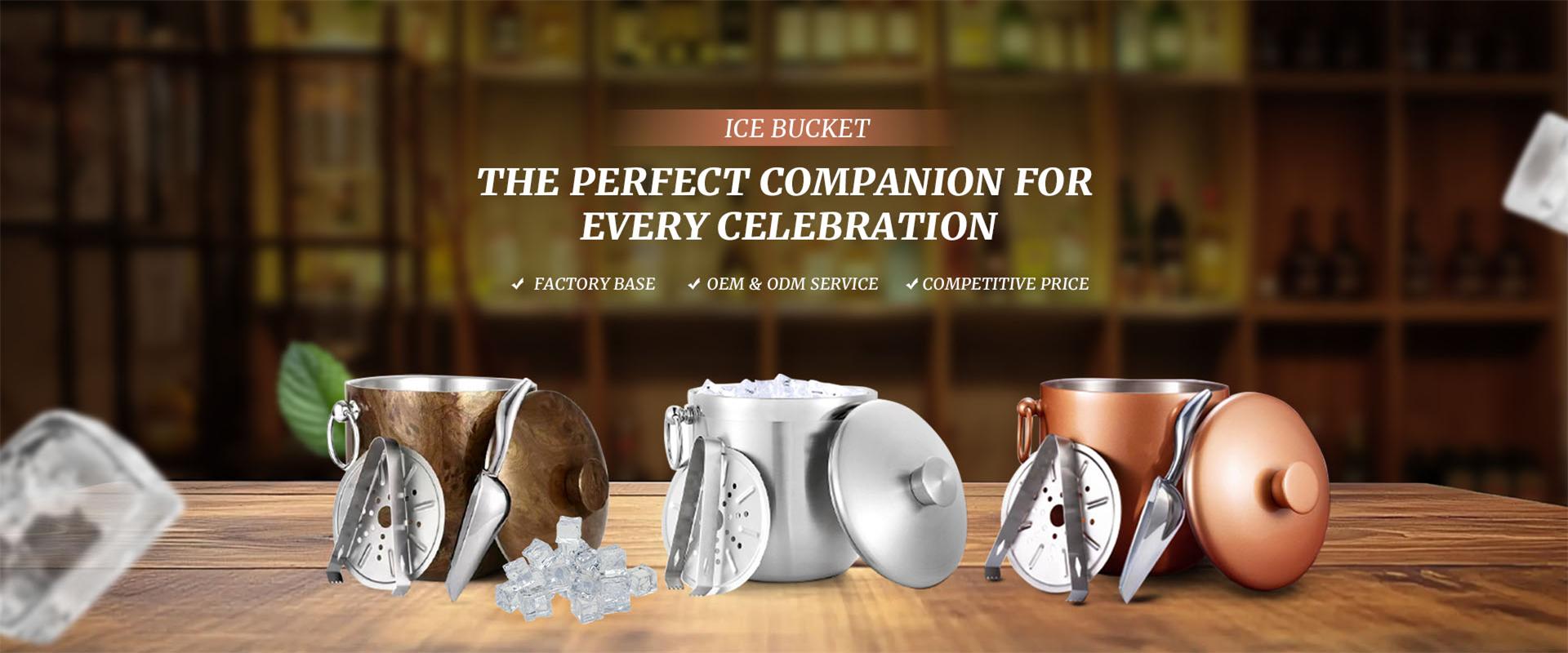
An ice bucket is intended to keep cubes available for cocktails, spirits, water and soft drinks. A lid and scoop help reduce direct hand contact and protect the ice during service.
Our small ice bucket for bar has a 3.0L capacity and separate bottle-storage area. This hybrid layout can organize one bottle and ice within a compact service station, but buyers should confirm the bottle dimensions and desired ice quantity.
Can One Product Perform Both Jobs?
A large open bucket can chill a bottle, and an insulated ice bucket may keep a small bottle cold. However, using serving ice around a bottle may introduce water, label residue or handling contamination. Restaurants and hotels often separate the two functions for clearer hygiene procedures.
An OEM stainless steel wine chiller and ice bucket program can still share materials, finishes and brand design. Coordinated products may use the same:
Stainless steel appearance
Logo process
Handle style
Surface texture
Retail packaging language
Carton marking system
The dimensions and accessories should remain specific to each use.
What Should Procurement Teams Confirm?
For a wine chiller, provide the maximum bottle diameter, bottle count, desired ice level and presentation style. For an ice bucket, specify the capacity, retention period, lid, scoop, handles and service location.
Our ice bucket models commonly support:
Customized logos
Sanded, frosted or polished finishes
Individual polybag and color-box packing
Custom packaging development
MOQ starting at 500 pieces for listed models
Approximate 45-day standard production planning
We have worked with household and appliance products since 2011, supporting international trade and customized product programs. Click to visit our About page for our company background and exhibition information.
Develop a Coordinated Beverage Collection
An OEM stainless steel wine chiller and ice bucket range should look consistent while preserving the correct function of each item. Send us your reference products, bottle dimensions, required capacity, finish and packaging brief. We can review the range and prepare a quotation for hospitality, retail or promotional distribution.