


How Long Does It Take To Make Ice Cubes?
Making ice cubes usually takes three to four hours in a household freezer, but the complete process may be longer when filling trays, allowing large cubes to freeze, transferring them to storage, and preparing enough ice for several drinks.
“How long does it take to make ice cubes?” therefore has two answers: one batch may freeze within several hours, while producing enough ice for a party, restaurant shift, or hotel service period can require advance planning over one or more days.
Begin With the Quantity Required
A small tray may produce only a dozen cubes. Even when each batch freezes in four hours, several batches may be needed for a group.
Estimate demand according to:
Number of guests
Types of drinks
Cube size
Indoor or outdoor temperature
Event duration
Whether ice will chill bottles as well as drinks
Distance between freezer and service area
Expected melt loss
Ice used to chill bottles should not be returned to drinks because the outside surfaces of bottles and containers may introduce contamination.
A Practical Production Timeline
Four to Twenty-Four Hours Before Service
Prepare large cubes, spheres, or directional clear ice. These formats need more time than standard tray cubes and may require additional handling after freezing.
Wash the trays and allow them to dry before filling. Use potable water and leave the expansion space recommended by the mold manufacturer.
Three to Four Hours Before Service
Standard cubes may be ready within this period when the freezer remains near its normal recommended setting. Avoid repeatedly opening the freezer to check them, since warm air can delay freezing.
One Hour Before Service
Test a cube from each tray. Transfer solid cubes to a clean, sealed freezer container and refill the trays if another batch is needed.
Do not place fresh water directly over finished loose cubes. It can freeze them together into a difficult-to-handle mass.
Shortly Before Guests Arrive
Pre-chill the serving bucket with ice or cold water, then empty and dry it before adding service ice. Place clean tongs or a scoop nearby and keep the lid closed whenever possible.
Why One Batch Sometimes Takes Longer
A slow batch does not always indicate a defective freezer. Several everyday conditions can extend the process:
The water started warm
Cavities are unusually large
The tray has thick silicone walls
Warm food was recently placed in the freezer
Packages are blocking internal airflow
The door has been opened frequently
Frost buildup is affecting performance
The appliance is located in a very warm environment
Check the freezer temperature with a suitable appliance thermometer when freezing becomes consistently slow. Food-storage problems may require appliance servicing rather than a different ice tray.
Faster Ice Versus Better Ice
Small cubes freeze quickly but expose more surface area to the drink and generally dilute it faster. Large cubes take longer to make but are often selected for spirits and cocktails where slower dilution and visual presentation matter.
Clear ice requires the longest preparation because the process intentionally controls freezing direction. The best format depends on the beverage, glass size, service speed, and expected appearance.
Safe Ice Handling
Ice is food. Wash hands before handling it, use clean scoops or tongs, and keep tools away from countertops and other contaminated surfaces.
Never use a glass as an ice scoop. The glass can chip or break inside the bucket, creating a serious hazard that may be difficult to see among the cubes.
Drain meltwater as required by the serving process and clean the bucket after use. Do not return unused service ice to the freezer.
Our Ice Bucket Production and Supply
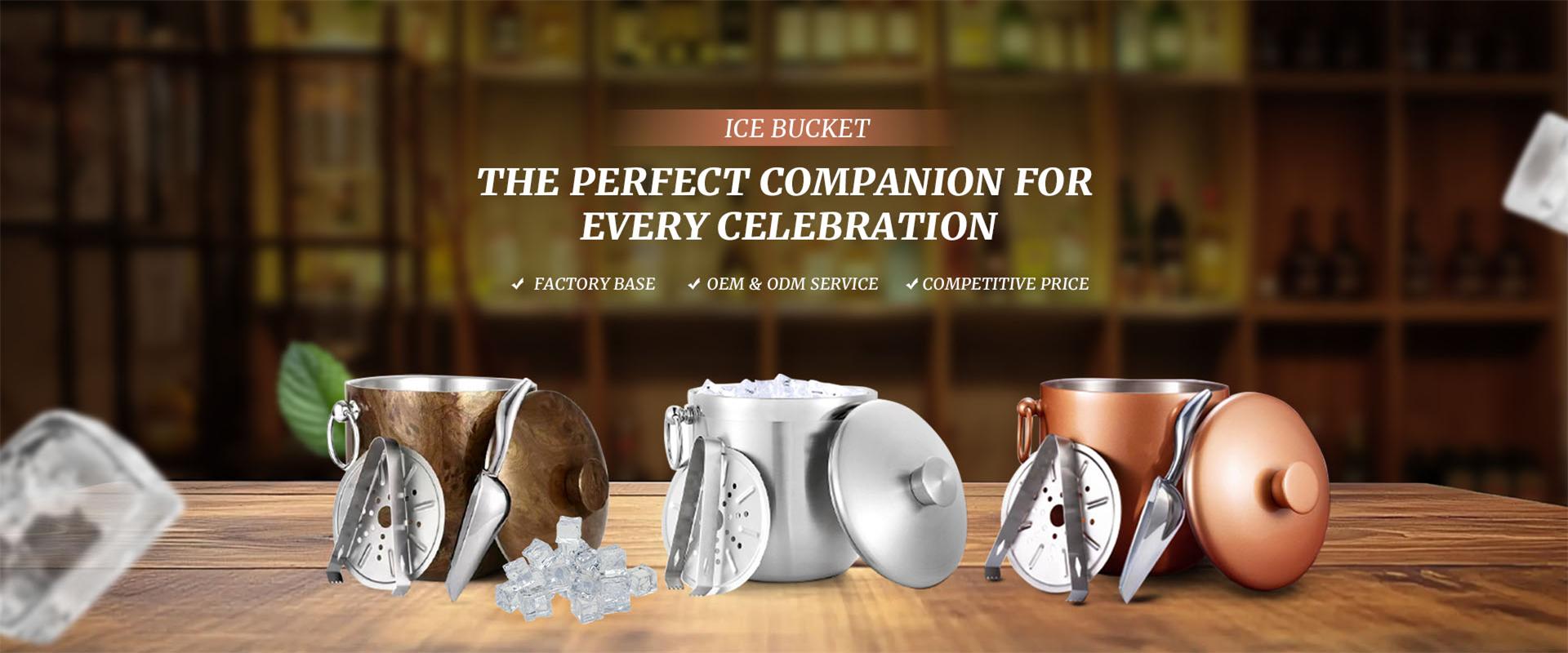
Our factory manufactures stainless steel ice buckets for residential and professional beverage service. Product directions include insulated, double-wall, lidded, handled, scoop-equipped, minibar, tabletop, hotel, party, outdoor, and commercial models.
As an OEM/ODM stainless steel ice bucket manufacturer, we support customized logos, finishes, colors, capacities, lids, handles, accessories, and packaging for suitable orders. Our houseware business was established in 2011 and serves international trading and product-customization requirements.
The insulated ice bucket with lid is one option for slowing heat transfer after the cubes leave the freezer.
Evaluate Ice Buckets as Service Equipment
Wholesale and hospitality buyers should check more than external appearance. A sample review should consider:
Usable capacity
Interior cleanability
Lid fit
Handle attachment
Insulation structure
Stability on a tabletop
Scoop or tong storage
Surface resistance to routine handling
Logo appearance
Individual and master-carton packing
A larger bucket is not automatically better. Oversized containers take more ice to pre-chill, occupy more service space, and become heavy when filled.
Make Enough Ice Before It Is Needed
A standard batch may take only a few hours, but reliable beverage service depends on calculating demand, selecting the right cube size, creating several batches, and storing them correctly.
Produce ice ahead of schedule and use insulated serving equipment to protect the work already invested in freezing it. This is more dependable than trying to accelerate a final batch shortly before service begins.
Previous: Are Reusable Ice Cubes Safe?