


How Do You Properly Handle And Maintain Commercial Ice?
Commercial ice should be treated as food. Use clean, dedicated scoops, prevent hand and glass contact, store ice in sanitized food-safe containers, and follow documented cleaning procedures. Ice used to chill external packages should not be reused in drinks.
Why Is Commercial Ice Handling Important?
Ice is widely used in restaurants, bars, hotels, catering operations, and beverage-service businesses.
Although it is frozen, ice can still become contaminated through improper handling, unclean equipment, or unsuitable storage conditions.
Contamination may occur when workers touch ice directly, use dirty utensils, or store ice in containers that have not been properly cleaned.
Food-safety procedures should therefore apply to both ice production and serving.
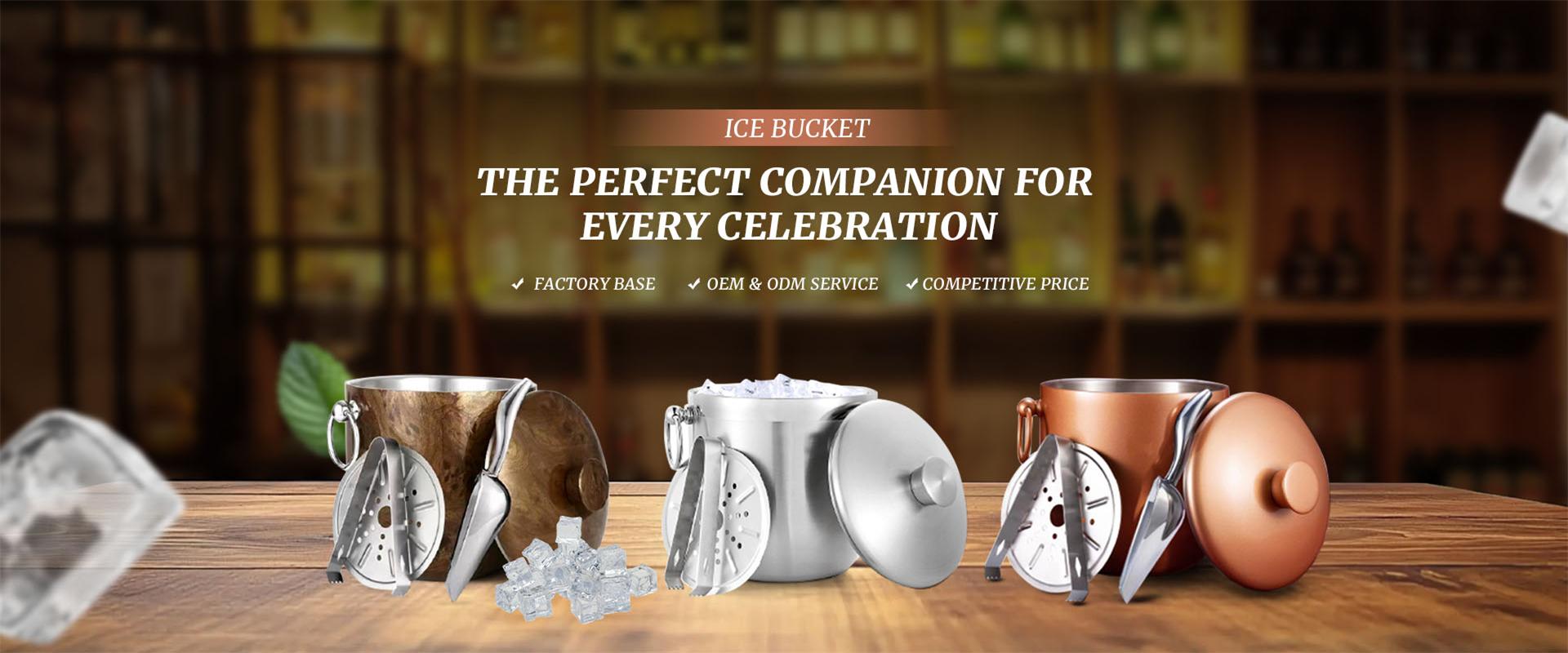
At SENGHO, our stainless steel Ice Bucket products support commercial ice storage and presentation, with attention to cleaning accessibility and practical beverage-service requirements.
What Are the Basic Rules for Handling Commercial Ice?
Several practices help reduce contamination risks.
01 - Use Clean Ice Scoops
Ice should be handled using dedicated, clean utensils rather than bare hands.
02 - Never Scoop Ice With a Drinking Glass
Glassware can chip or break, introducing fragments into the ice.
03 - Store Scoops Properly
Keep scoops in a clean, protected location between uses, following the applicable food code and equipment instructions.
04 - Avoid Direct Hand Contact
Workers should not reach into the ice container with their hands.
05 - Protect Ice From Contamination
Keep ice containers covered when practical and avoid exposure to food residue, dust, and splashes.
06 - Separate Different Uses
Ice used to cool beverage containers or other external surfaces should not later be served as an ingredient in drinks.
These practices are particularly important in high-volume beverage-service environments.
What Containers Are Suitable for Commercial Ice?
Commercial ice containers should be made from suitable food-contact materials and should be practical to clean.
Stainless steel is a common option because it offers durability, corrosion resistance, and smooth surfaces.
Insulated construction can also reduce the rate of ice melting during service.
Our Stainless Steel Double Wall Ice Bucket provides a compact option for beverage presentation in hotels, restaurants, and catering environments.
However, a durable metal container still requires regular cleaning and sanitation.
How Should Commercial Ice Buckets Be Cleaned?
Cleaning procedures should follow the manufacturer's instructions and applicable local food-safety requirements.
A typical process includes:
01 - Empty the Container
Remove remaining ice and discard it appropriately.
02 - Remove Loose Residue
Check the interior, lid, handles, and accessories.
03 - Wash the Surfaces
Use a suitable detergent and cleaning method approved for the material.
04 - Rinse Thoroughly
Remove detergent residue when required by the cleaning process.
05 - Sanitize
Apply an approved food-contact surface sanitizer according to its label instructions, including the required concentration and contact time.
06 - Allow Appropriate Drying
Follow the sanitizer and equipment instructions before refilling the container.
07 - Inspect the Equipment
Check for damaged surfaces, worn seals, corrosion, and areas that are difficult to clean.
Cleaning schedules should reflect operating frequency, contamination risk, and applicable regulatory requirements.
How Often Should Commercial Ice Equipment Be Cleaned?
There is no single cleaning interval suitable for every ice machine and storage container.
The required frequency depends on the equipment type, manufacturer's instructions, local food codes, and actual operating conditions.
For example, a small tabletop ice bucket may be cleaned after each service period, while a commercial ice machine requires a documented maintenance and sanitation schedule.
Visible slime, unusual odors, residue, or signs of contamination should trigger immediate inspection and corrective action.
Ice from a potentially contaminated system should not be used for beverages until the problem has been addressed.
What Is the Difference Between Beverage Ice and Cooling Ice?
This distinction is important in commercial food handling.
| Ice Application | Main Purpose | Handling Requirement |
|---|---|---|
| Beverage Ice | Added directly to drinks | Must meet food-safety requirements |
| Food-Service Ice | Used in food preparation | Protected from contamination |
| Cooling Ice | Chills bottles and containers | Must not be reused as drink ice |
| Display Ice | Keeps certain products cold | Follow food-contact and drainage rules |
Once ice has been used to cool the exterior of bottles, cans, or other packaged products, it should not be transferred into beverages.
The two uses should remain clearly separated.
How Does Ice Bucket Design Affect Hygiene?
Product construction can influence cleaning efficiency.
Useful design details include:
Smooth Interior
Reduces hard-to-reach areas where residue may accumulate.
Removable Lid
Provides access for cleaning and sanitation.
Suitable Handle Structure
Allows convenient handling without unnecessary contact with stored ice.
Compatible Scoop or Tongs
Supports hygienic ice transfer.
Appropriate Capacity
Prevents overfilling and makes service replenishment more manageable.
Our Ice Bucket With Lid and Scoop combines a stainless steel body with accessories intended for ice handling.
For hospitality buyers, these functional details can be more important than decorative appearance alone.
What Should Commercial Ice Bucket Buyers Check?
For hotels, catering contractors, barware distributors, and foodservice equipment importers, purchasing considerations include:
01 - Food-contact material specifications
02 - Stainless steel grade
03 - Bucket capacity
04 - Insulation construction
05 - Lid and scoop configuration
06 - Cleaning accessibility
07 - Surface finishing
08 - Product dimensions
09 - Replacement accessory requirements
10 - OEM branding and packaging
At SENGHO, we support product discussions covering available materials, sizes, finishes, accessories, and commercial purchasing requirements.
Request Commercial Ice Bucket Supply
SENGHO supplies stainless steel ice buckets for hotels, restaurants, bars, catering businesses, and international distributors.
Our team can review ice-service requirements, bucket capacity, insulation structures, accessories, private-label branding, and bulk order specifications.
Request a Commercial Ice Bucket Quotation
Previous:
Next: Your Ice Bucket Is Double-Walled. Is It Vacuum-Sealed?